

A clear explanation of persistence in spatial computing
Persistence in spatial computing means that AR content will stay anchored in the same physical spot over time. When you return to a location, your virtual objects, models, and experiences appear exactly where you left them.
Persistence starts with Spatial understanding. AR headsets and mobile devices use SLAM, LIDAR, plane detection, and 6DoF motion to sense the geometry and visual features of your space. With this understanding, the system can place digital anchors reliably so that a 3D model or AR experience can feel perfectly stuck to the physical world as you move around.
Your device will store a spatial map of a space. When you return, the system relocalizes by matching the new sensor data in the current session to that saved map. This can be done through an image anchor or VPS systems. If the match is good, the anchor will load and the digital objects will reappear in the expected position. Occlusion, shadows, materials, lighting, and a consistent world mesh will help the object feel like it's part of the room.
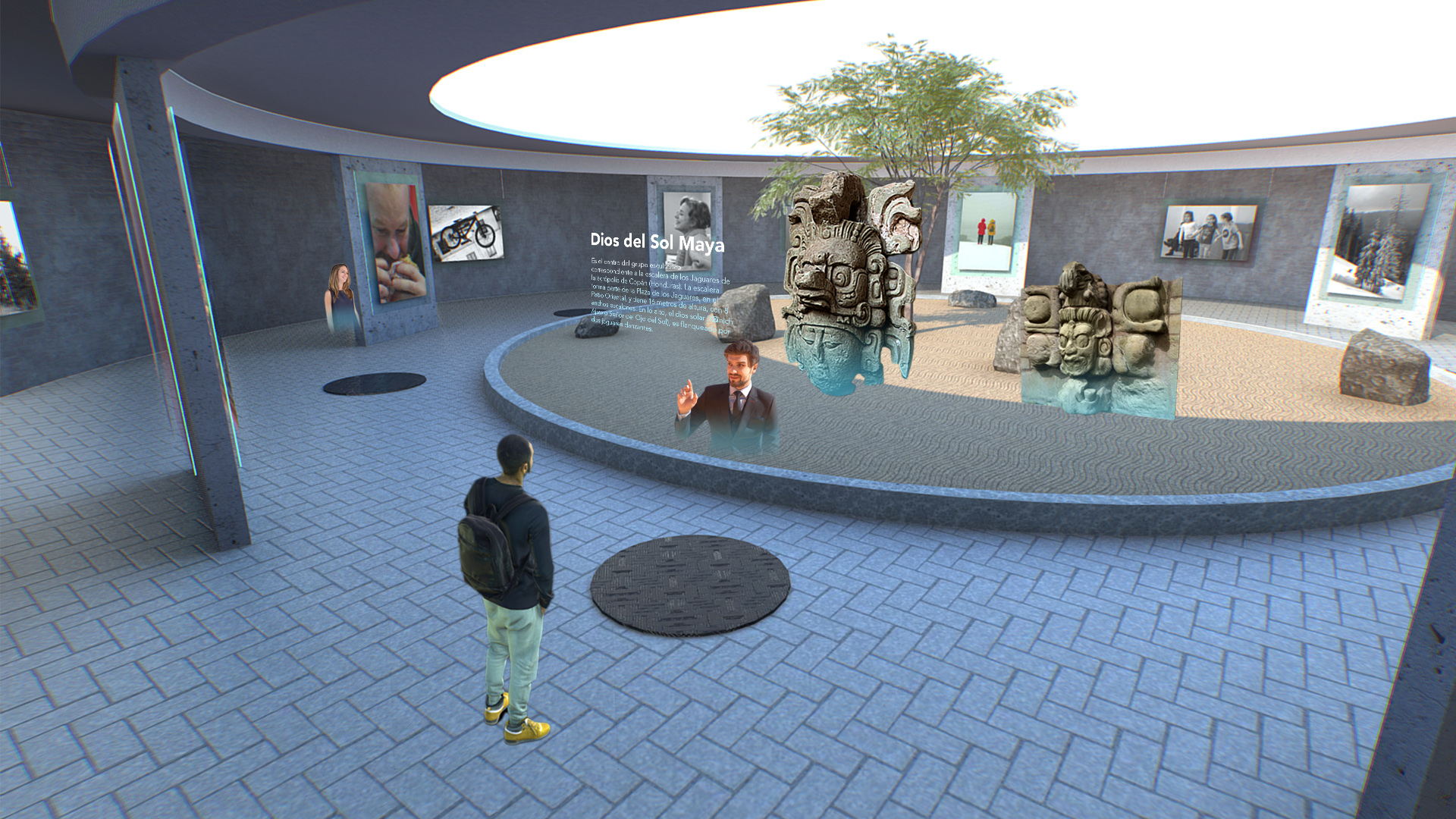
Persistence allows digital objects to have a sense of object permanence. When something remains where you left it, it feels like it was truly there and part of the environment. A persistent AR sign functions just like a real sign. A persistent sculpture feels installed rather than projected. A persistent note becomes a spatial memory.
Without persistence, AR is no more than a momentary effect. With persistence, AR becomes digital infrastructure. You can set up an immersive project or scene in a software like Trace that can evolve over time. You can return to these scenes, update them, and build long-term experiences that behave like spatial websites. Rather than disappearing like face filters on Snapchat or Instagram, Spatial content becomes something that you can return, expand upon and share, just like we do with the 2D internet.
Persistence also enables the idea of the Spatial internet. Content can persist across homes, workplaces, campuses, and any public space and become infrastructural just like the physical things that exist there. This turns AR from a temporary VFX spectacle into a reliable system for information, sharing, social experiences, storytelling, games, productivity, and more.
For creators, persistence allows them to craft multi-session experiences. A training experience can unfold across days with trainees coming back to test their knowledge again and again. An installation can react to repeated visits and adjust to show users new information. And a store can understand product information about a visitor and refresh its inventory to be tailored to their preferences.
It's important that persistent content feels intentional and stable, since it is meant to be seen repeatedly.
Create strong Anchors
Set up image anchors and VPS scans with visuals that have strong feature points and are easily recognizable. Avoid reflective or textureless surfaces that break relocalization.
Consider environment attributes and scale.
When adding virtual objects to their space, they should be added with the same thoughtfulness as a physical addition. Content should blend well with the environment and decor, not overlap existing objects, and have nuanced spatial relationships with physical content.
Use meaningful permanence.
If you are saving content to a space, it should matter and be impactful. Persistent clutter reduces clarity for users. Persistent utility enhances trust.
Support returning use.
Users should find content where they expect it and ensure that your objects are optimized so that scenes load predictably. When adjusting content, it should be deliberate and helpful, or else you could confuse or surprise your users. Scenes should load predictably. Users should find content where they expect it. Adjustments should be deliberate and explained when possible.
Build for evolution.
Persistent projects behave like a website that you're updating over weeks and months. They can update, shift, or grow, and your design should account for changes that will occur in the future.
With Trace AR , persistence is a core feature. A creator can set up scenes that users revisit across phones, tablets, or AR headsets. Image anchors maintain the spatial project. Any updates to assets, layouts, or content will appear in the same location and support long-term experiences.
• A shared workspace has persistent digital notes anchored to desks and whiteboards, so visitors can update them and learn from them as they are posted.
• A museum that updates its exhibits every three months, also refreshes the AR overlays so they coincide with the new content. Similar to how their 2D website may update throughout the year. .
• A Trace AR project that shows off an interactive car showroom for hundreds of new visitors to the dealership every month.
• Persistence doesn't require fully mapping a space. You can often anchor an entire room through a single image anchor.
• Persistence requires a scene to be saved, but also to be reloaded within a space reliably
• Persistence does not require heavy visuals. Subtle layers and labels can persist within a space or on an object and be just as effective.
Persistence is a key element in making spatial computing feel real. When content stays where it belongs, it feels like a tangible extension of your environment. This stability is foundational for long-term AR projects and for the infrastructure of the spatial internet.
Learn about augmented reality or start creating your own experiences.