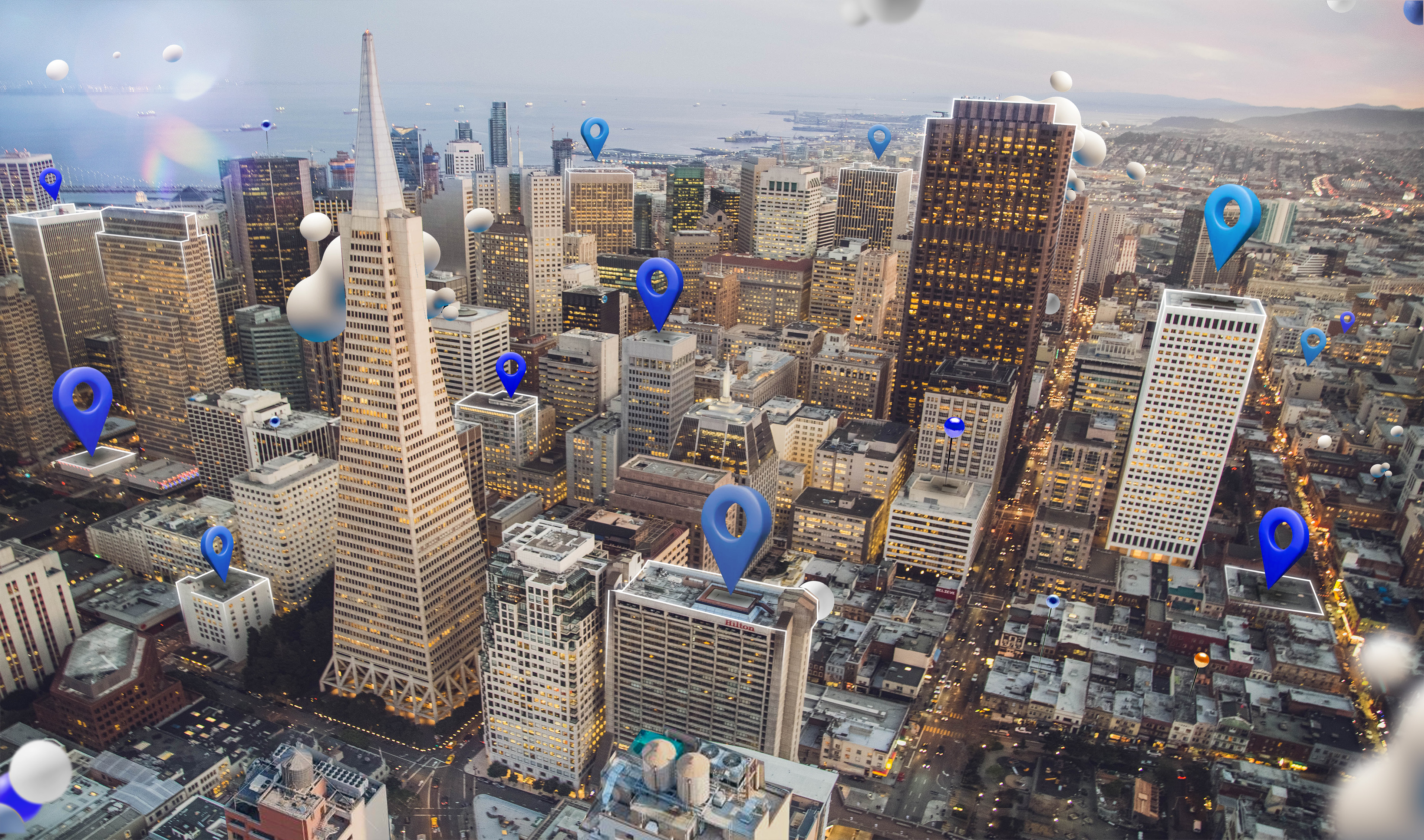


A clear explanation on the Spatial Internet and how it relates to AR
The Spatial internet is the digital layer of content that is deployed in the physical world rather than inside of 2D screens. It anchors information interfaces and experiences at real locations to enable digital content to become contextual and useful within the physical world.
Today's internet is two-dimensional. It appears in 2D glowing rectangles, made up of browsers and apps that are independent of place. Everyone has the same experience regardless of their location. The Spatial internet changes this paradigm by tying digital information to buildings, places, and objects.
AR headsets and mobile devices allow augmented reality content to come into three dimensions. Systems like SLAM, world tracking, LiDAR, and 6DoF Motion allow these devices to understand their environment. This understanding becomes foundational for placement, persistence, and immersive experiences. A world mesh provides structure. Spatial anchors keep content stable. Occlusion, shadows, and environmental lighting allow objects to blend naturally into their environment.
Instead of web pages, the Spatial internet uses physical locations. At Trace, we call these Scenes and Projects, but they function like a domain for a physical place. A storefront can have an interactive layer of retail content. A museum can reveal a holographic scene when a visitor walks by. A train station can show its live schedule on AR screens anchored to the wall.
The Spatial internet brings the power of digital content to any physical place. Instead of searching through screens, information can appear where it is relevant. The content becomes situational rather than generic, it adapts based on who is present, what they're engaging with, and what task is most important at that moment.
This shift removes the anonymity of traditional screens. With experiences like Pokémon Go, people explored the real world and became the characters they embodied. They met other people and went to real places, engaging with digital content. With the Spatial internet, the digital experiences that we engage with play off of our surroundings and encourage real-world interactions that can break people out of their physical and digital silos.
One of the main powers of the Spatial internet is clarity. When digital information is tied to real context, it requires less searching and questioning. Users don't sift through menus; they simply move through the world and content and context reveals information around them.
The Spatial Internet also opens up new creative and commercial possibilities. Artists can build site-specific digital installations. Architects can show full-scale models inside real environments. Brands can create location-anchored stories. Training systems can overlay instructions directly on machinery. And these opportunities expand wherever physical context is important.
Designing for the Spatial Internet means treating the world as an extension of the interface. Content should be aware of surfaces, depth, lighting, and the context of the environment.
The Spatial Internet isn't about filling physical spaces with digital noise. It's about precision, contextuality, and balance. Information can appear when it's useful, and digital content should feel realistic while also providing surprise and delight when appropriate. Controlling content within this mixed reality leverages the natural inputs of AR headsets and spatial mobile devices, like taps, swipes, hand gestures, eye tracking, controller input, and eventually neural interfaces. Persistence is a key feature on the Spatial internet. Persistent content allows a user to return to a location and find everything exactly where they left it. This consistency supports object permanence, learning, collaboration, and reliability.
• An amusement park where immersive digital overlays are integrated into every world, ride and attraction with as much detail as the physical exhibits.
• A school of architecture where students have 1:1 scale models of their floorplans regularly displayed in AR in the auditorium and on the green outside of their building.
• A public park that hosts local digital artists AR artwork on rotation every month.
• The spatial internet is not limited to headsets. Phones, glasses, and hybrid devices can all be entryways into spatial digital experiences.
• Multiple layers within the spatial internet can be built on the same physical space. This can reveal different information, games and experiences to various groups of people.
• It does not replace the 2D web. It builds a spatial layer that is integrated with the world around you.
The Spatial Internet breaks digital content out of screens and into real physical places. When digital content understands the world, it becomes more informative, helpful, and expressive. These AR experiences aren't just about joy and excitement, but also about digital content delivered at the right time and place.
Learn about augmented reality or start creating your own experiences.