

A clear explanation of how ai and spatial computing work together
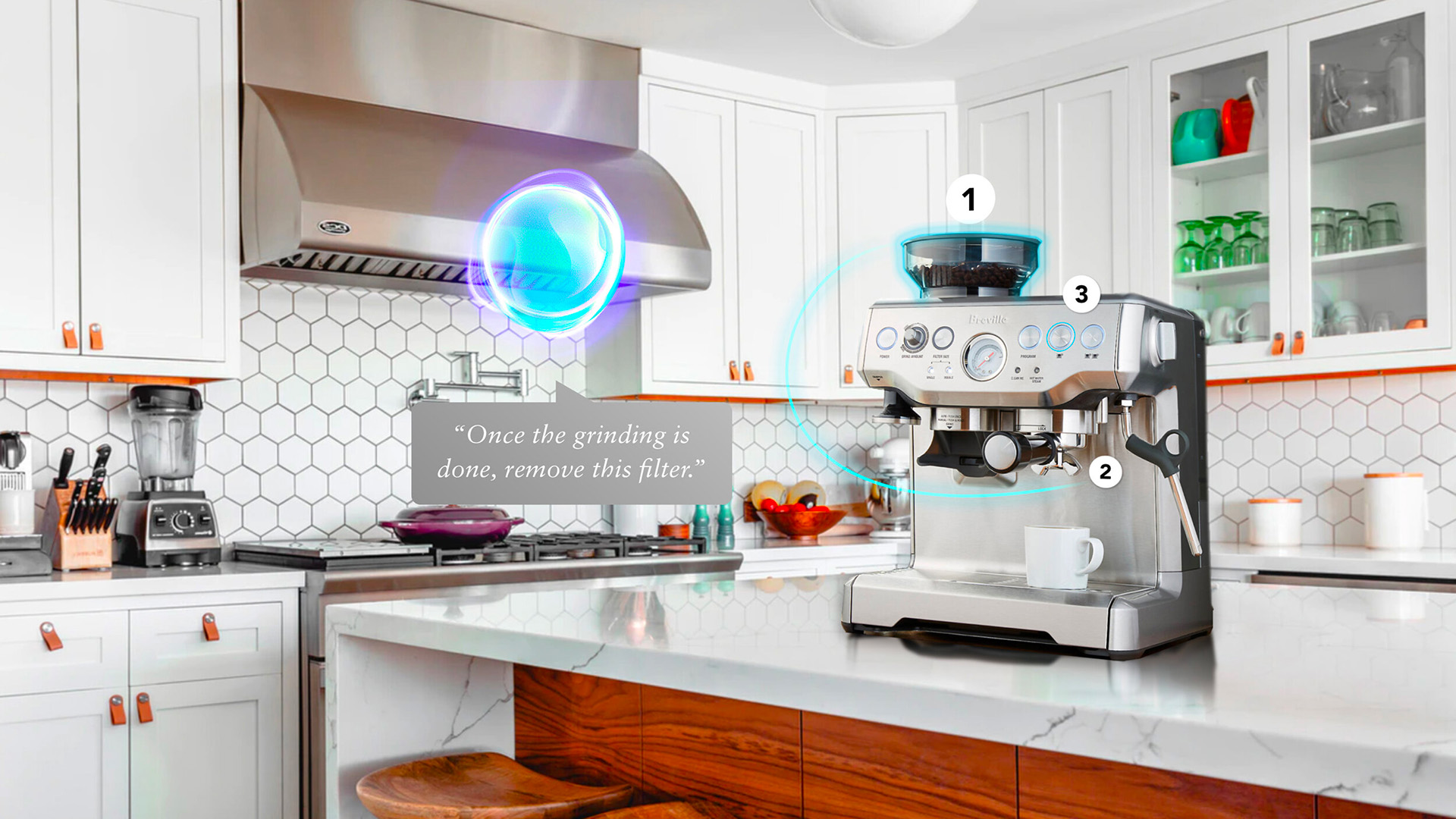
AI and spatial computing work together by accelerating creative processes and enhancing world understanding and context. Spatial computing allows users to anchor digital content to the physical environment, while AI can interpret the scene and add intelligent information for a user at the right time and place.
Modern AI creation tools like ChatGPT, Google Nano Banana, Rodin 3D and more allow users to create 2D and 3D assets at unprecedented speeds. Pictures, Video and 3D Models are all essential assets to help build out AR experiences. By thoughtfully incorporating these creation tools into asset creation pipelines, users can dramatically accelerate the creation of spatial computing experiences.
In addition to asset creation, AI can also recognize objects, describe scenes, and extract meaning from images or sensor data. Spatial computing helps to provide information and structure for AI intelligence by understanding the world using SLAM, LiDAR and 6DoF motion. Sensors on AR Headsets and mobile devices can understand planes, depth and geometry. By passing this information to an AI, the model can derive additional layers of understanding that can be conveyed to the user.
AI is very strong at classifying what is in an image or what a user is looking at. It can recognize objects like chairs, products, machines or text. With this information it can help to share secondary details like instructions or history about an object. This can be revealed to a user through audio, written text or assets that are rendered on the fly.
This combination of spatial sensor data and AI intelligence can support location-aware guides, contextual hints, object understanding and more. Many of these capabilities are still in development, but as they evolve, the benefits of AI will be very impactful to spatial experiences.
AI makes spatial computing more intelligent. It allows digital content to be more responsive and react to both the user’s goals and the context that it is in. A user could point at an object and ask about it. An AI system could reveal steps about a piece of machinery when a user approaches a machine. Content and graphics can update dynamically based on who they are being displayed for.
From the other side, spatial computing allows AI to feel more grounded and contextual in the world. Instead of learning through chat bubbles and screens, information can appear as anchored labels, 3D guides or media inside of your room at the right place. This facilitates limitless pathways for learning, training and new workflows.
AI also accelerates creation. Designers can generate 3D models along with their textures, lighting, environments and more within a fraction of the time that it took before. Tools like Rodin, Tripo AI and Gaussian Splat systems like Meta SAM can create assets in moments. Many of these need to have mesh optimization to work well in AR, but they can still speed up the process especially if users are aware of best practices for AR graphics.
AI can be a powerful tool to create rich spatial experiences for training, AEC, exhibits, brands and more. Reach out to the Trace team (info@trace3d.app) for help on custom AI workflows for enterprise projects.
Combining AI into spatial experiences follows common design principles for all AR experiences.
Context matters most.
Information should only appear when it is most relevant. With AI, context can become even more powerful to provide on demand information.
Believability depends on grounding.
AI-powered labels, guides, or information should be positioned correctly in the space using spatial anchoring and persistence.
Timing and subtlety are important.
AI should not overpower the environment. Spatial computing thrives when content is well integrated and information appears only when needed.
Input becomes multimodal.
Gaze, voice, gesture, and proximity can all be signals to trigger AI feedback or information. Doing this intelligently can feel magical for the user.
Creation becomes accessible.
AI lowers the barrier for generating models, assets, videos, and information. This should be used strategically so designers can focus on clarity, UX and storytelling.
• A training workflow where a user taps on a virtual machine part and AI explains the context and how it works.
• A retail scene with 3D models like tables, backgrounds, and indicators that were generated through 3D and 2D creation models.
• An AEC walkthrough where AI provides architectural insights about a space that are triggered based on the user's location and trained on prior information about the building.
• AI does not replace world understanding and spatial mapping. It leverages this information to provide and share information about your contacts.
• AI-generated assets still require optimization for performance and smooth interactions.
• Not all assets should be AI generated. Overusing these tools can result in sloppy or poorly thought out experiences.
Ai and spatial computing complement each other's strengths. One understands meaning, the other understands space. Together, they can create spatial experiences that feel intelligent, contextual, and embedded in the physical world. With Trace, we are thoughtfully integrating AI features into workflows so that creators can bring ideas to life. Reach out to our team for custom AI projects and enterprise services (info@trace3d.app).
Learn about augmented reality or start creating your own experiences.