

A clear explanation of passthrough vs see-through AR headsets and technology
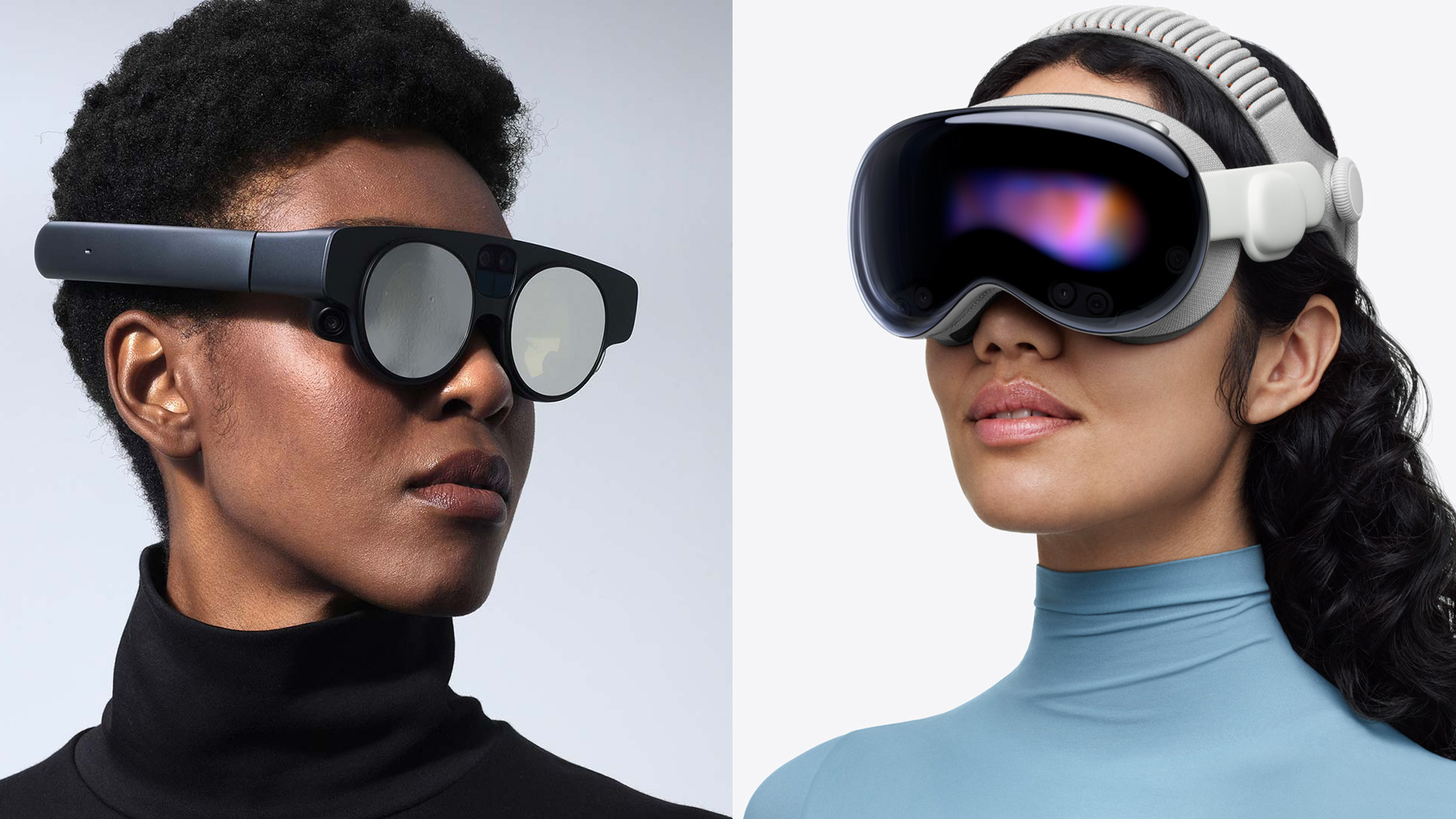
Passthrough AR uses cameras to capture the physical world and displays it on screens inside of a headset. It composites digital content with this video feed to give the perception of a blended digital and physical environment. Optical see-through AR uses transparent lenses so that users see the real environment directly with digital graphics projected onto the lenses.
Passthrough devices like the Apple Vision Pro and Meta Quest capture the real world using high-res cameras and display the result with digital layers rendered on top. This approach composites AR content with the video capture before it is rendered which allows it to appear solid and perfectly integrated in the frame. These devices also leverage occlusion, realistic rendering, and detailed geometry that blends with lighting that can be estimated from LiDAR or camera sensors.
Optical see-through devices rely on waveguides or transparent projection systems. Users view the real world directly, while light from 3D digital assets is added to the lens. This ensures that the environment is natural because it's what you're already seeing. However, optical displays struggle with brightness, contrast, and color because the projected image appears on transparent lenses.
Passthrough can show fully opaque objects, dark shadows, and convincing lighting. Optical see-through must layer digital light onto real light, which limits saturation, depth, and overall presence. Someone may wonder why passthrough has become more common recently, and the answer is simple: cameras and displays have become fast and high-quality enough to mimic your true vision with less visible lag. Additionally, these headsets can usually be larger with more conventional display technology.
Each approach has strengths shaped by physics and hardware. Passthrough enables immersive AR experiences where digital content feels grounded and gives the user a wide field of view. You can place a sculpture in your room, walk around it, and see all the accurate physical effects. Training, simulation, entertainment, and spatial computing apps benefit from this stability.
Optical see-through offers a natural sight and a smaller form factor. The screen is transparent and allows the user to see the world clearly. Devices can be lightweight, open, and comfortable for long periods. This form factor is more like normal glasses and more socially acceptable in common environments.
The challenges for optical see-through devices lie in brightness and contrast. Digital elements must fight the environment, especially in daylight. Optics also limit the size of the projected image resulting in a smaller and less immersive field of view.
Ai glasses, like Meta Ray-Bans, are another type. These devices lean on voice, glance, and lightweight overlays without full spatial computing. They do not anchor complex 3D models or build a world mesh. Instead, these focus on micro-interactions and contextual information. The ideal form factor leverages lightweight glasses with 6DoF tracking and AI capabilities.
When designing for any headset, you must be aware of the capabilities of each system.
Passthrough AR supports rich, opaque, believable content. Designers can rely on shadows, reflections, and environment mapping. UI and details can be in full reliable color. Objects will feel more present, and due to the headset size, they often have strong tracking and sensing capabilities.
Optical see-through AR requires more awareness and restraint. Text must be lighter and brighter, and also aware of background contrast. Content should avoid small details. Large layouts should be aware of the field of view and what a user will perceive at any moment.
Generally, an AR experience that is spatial And designed well should work on both a passthrough and an optical see-through device. As users create experiences for both headsets and mobile, every device and input should be considered to ensure consistency and clarity.
• An AR exhibit at an outdoor historical monument is easy to see on a phone, tablet, or passthrough headset but becomes washed out due to the bright light on an optical see-through device.
• A technician wears optical see-through glasses to see contextual overlays in his warehouse. He is able to comfortably wear the device all day due to the light-weight form factor.
• Passthrough is not VR pretending to be AR. It is a camera based AR system with distinct strengths and benefits.
• Optical see-through devices do not guarantee photorealism. It trades opacity for natural sight.
Fast-through and optical see-through both create AR experiences with different trade-offs. One prioritizes immersion and rich visuals. The other prioritizes natural sight, lightness, and a more ideal form factor. Both types will continue to evolve and designers should leverage the strengths of these devices, as well as phones and tablets, for their AR experiences.
Learn about augmented reality or start creating your own experiences.